Preserving Our Past, Present & Future for the Bedlington Terrier
Dedicated to the Dogs We Loved Yesterday, the Dogs We Love Today and the Puppies We Will Love Tomorrow
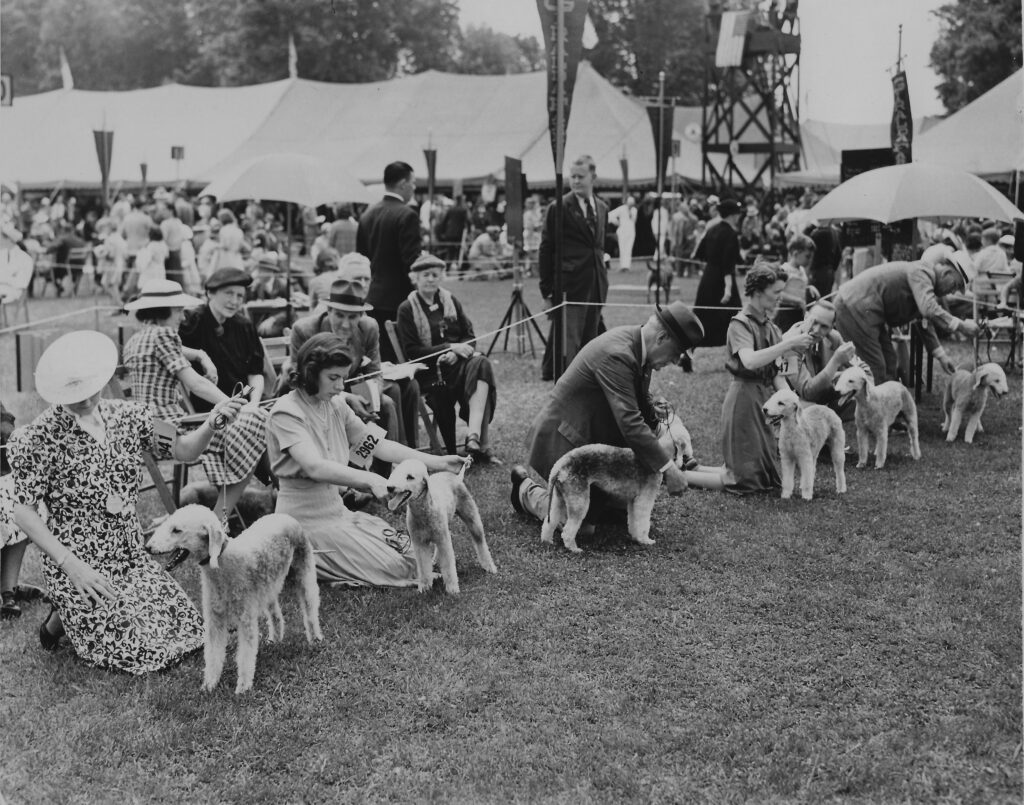
The Bedlington Terrier Club of America was officially formed on May 28, 1932, at the Morris & Essex dog show, thanks to the dedication of a small but enthusiastic group of breeders and exhibitors. The breed had gradually gained recognition in the United States since the early 1900s. Key contributors included Dr. Chas. J. McAnulty and Colonel M. Robert Guggenheim, who played vital roles in organizing the club and developing its standard. The club persisted and eventually joined the American Kennel Club in 1937, helping to promote the Bedlington Terrier and ensure its enduring presence and appreciation in America.
Today’s Bedlington terrier is recognized as a loving, playful, adaptable, and obedient family companion.
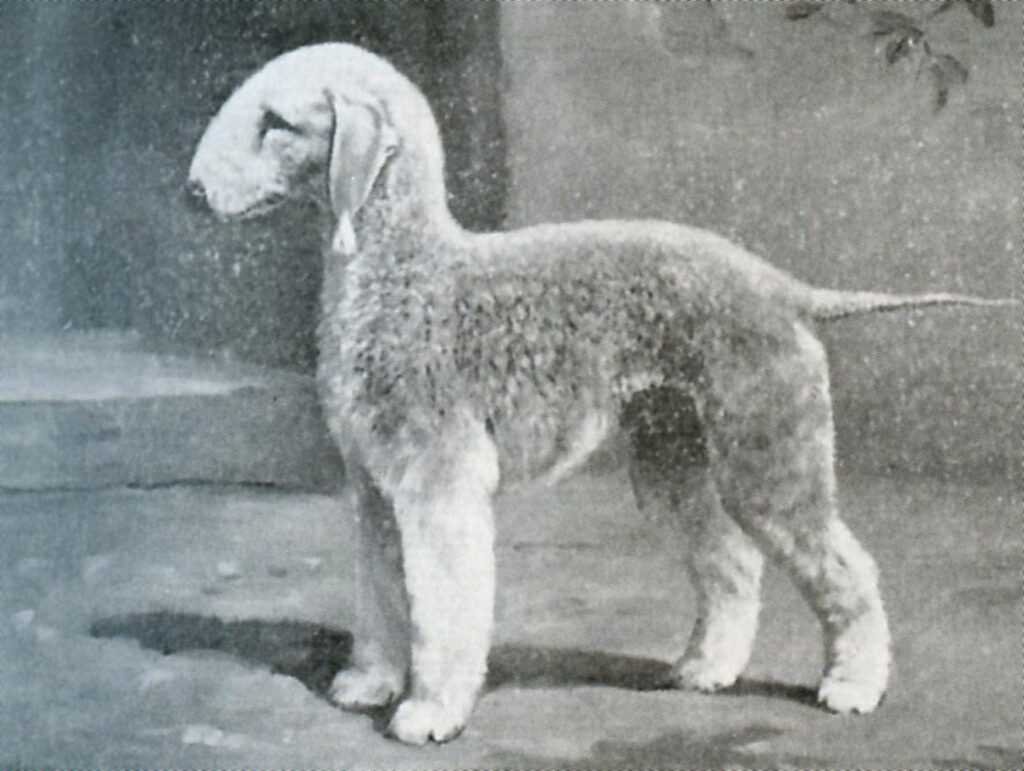
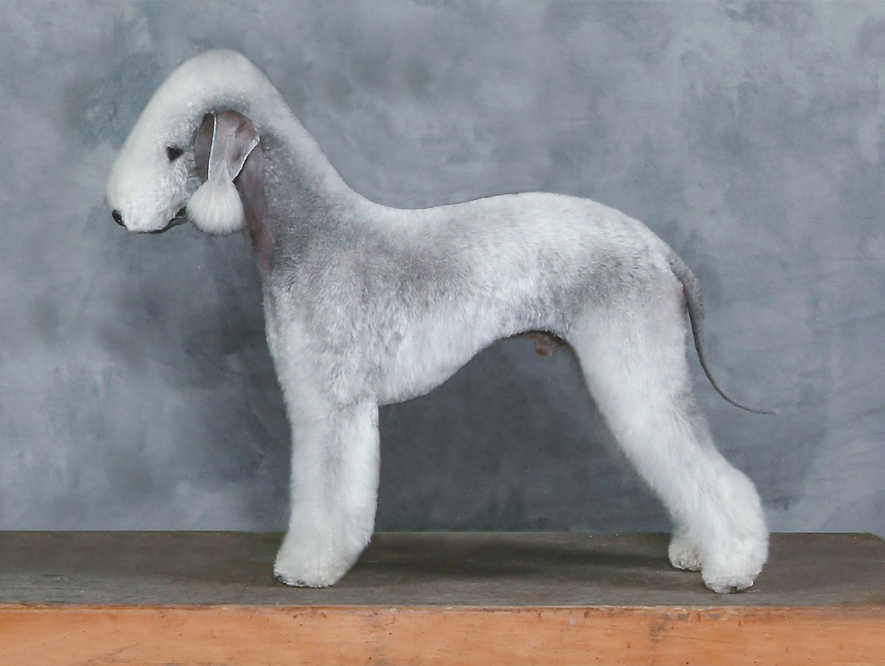
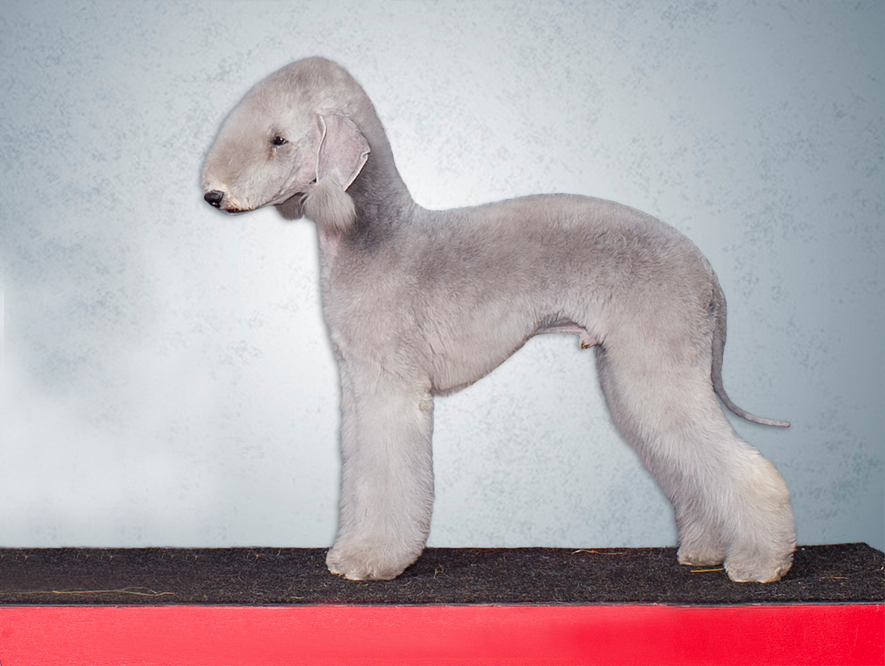
The Bedlington terrier is a unique purebred dog, often thought to look like a lamb due to its soft hair, size, and shape but has the heart of a lion.
It features a narrow head, arched loins, and a raciness.
The breed has the oldest non-broken pedigree among terriers, dating back to 1782, originating near Bedlington in northern England.
Bedlingtons are natural hunters, bred for their ability to go to earth after vermin and rodents, known for their stamina, courage, loyalty, and determination.
The Formation of the Bedlington Terrier Club of America
Establishing a Legacy in American Canine History
Building the Foundation
The story of the Bedlington Terrier Club of America begins in the early twentieth century—a time when the Bedlington Terrier steadily gained admiration among American dog lovers. This growing interest was fueled by dedicated breeders and exhibitors, all captivated by the breed’s unique look and lively personality. Their enthusiasm set the stage for a remarkable journey in American canine history.
Official Formation at Morris & Essex
On May 27, 1932, the Bedlington Terrier Club of America was officially launched at the prestigious Morris & Essex dog show. This milestone reflected the commitment of a small, passionate group determined to elevate the breed’s profile. Their collaboration created a strong foundation that continues to support the club’s role in the American dog show circuit today.
Influential Leaders and Early Champions
Two names stand out in the club’s formative years: Dr. Chas. J. McAnulty and Colonel M. Robert Guggenheim. Their vision and leadership guided the club’s early growth and helped establish the official breed standard, bringing together Bedlington enthusiasts and ensuring consistency in the breed’s development.
As Colonel Guggenheim gradually stepped back, the Neary family emerged as influential supporters. Anthony Neary, deeply connected to Bedlington township in England, brought a personal touch to his advocacy for the breed. In the 1930s, Bedlington Terriers were a rare sight at shows, but thanks to persistent efforts, thirty-two Bedlingtons competed at Morris & Essex in 1932—a clear sign of the community’s dedication.
Dr. McAnulty and Anna Neary were instrumental in building momentum for the club. With Colonel Guggenheim as its first president, the organization thrived under the leadership of notable figures such as Mrs. Emanuel Gerli, Sanford Freund, Colonel P.V.G. Mitchell, Mrs. Paul Willemsen, Mrs. Rezin Davis, William A. Rockefeller, L.H. Terpening, and current United States commissioner, Martin C. Epstein. Each contributed to the club’s growth and the breed’s rising reputation.
In 1936, Neary imported Ch. Love Letter from Bedlington, England for Colonel Mitchell, followed by Ch. Tarragona. Their pairing produced the first American-bred Bedlington to win Best in Show—a testament to the club’s commitment to excellence. While some English breeders questioned the decision, the quality of Ch. Lady Rowena set a new standard.
Recognition by the American Kennel Club
The club’s dedication paid off in 1937 when it was admitted to the American Kennel Club (AKC). This recognition elevated the Bedlington Terrier Club of America’s standing and provided a wider platform for promoting the breed. The partnership with the AKC helped secure the Bedlington Terrier’s place in the American dog world, ensuring ongoing appreciation and support.
Notable Achievements and Enduring Impact
Over the years, many devoted individuals have shaped the club’s history. Elisabeth Funkhauser, working with Mr. Terpening, bred the distinguished Ch. Canis Laris, while Mrs. D’Andrea’s Ch. Midday Mystery and Mrs. Eunice B. Clark’s accomplishments across countries are noteworthy. John Morrison’s Bedlington claimed Best of Breed from seventy-five entries at Morris & Essex in 1946, and the Roth family’s efforts in importing, exporting, and promoting the breed have been invaluable. The Newsomes, Wilda Woehr, the Scherffs, Elizabeth Brewer, and many others have also played vital roles in advancing the club’s mission.
A standout moment came in 1948 when Ch. Rock Ridge Night Rocket won Best in Show at the renowned Westminster Kennel Club Dog Show—the first Bedlington Terrier to achieve this honor. His additional victories at Morris & Essex in 1947 and 1948 marked a significant turning point for the breed’s visibility. The commitment and sportsmanship of his breeders, Mr. and Mrs. William A. Rockefeller, are widely admired, underscoring how individual passion can elevate the entire dog community.
Legacy and Continuing Mission
Since its inception, the Bedlington Terrier Club of America has been a steadfast advocate for breeders, exhibitors, and enthusiasts nationwide. The club’s work has helped secure the breed’s legacy, ensuring the Bedlington Terrier remains a cherished member of the American canine family. Today, their mission continues—welcoming new generations of dog lovers and fostering appreciation for this unique, fun-loving and remarkable breed.
The Mission of the Bedlington Terrier Club of America
To encourage and promote the breeding of purebred Bedlington Terriers and to do everything possible to bring their natural qualities to perfection.
To insist that members and breeders accept the standard of the Bedlington Terrier adopted by the Bedlington Terrier Club of America, and approved by the American Kennel Club, as the standard of excellence by which Bedlington Terriers shall be bred and judged.
To conduct sanctioned and licensed specialty shows under the rules of the American Kennel Club.
To urge all to follow the Code of Ethics adopted by the club as a guide for breeding, showing, and owning Bedlington Terriers.
Bedlington Terrier Club of America Constitution
As adopted by the membership at the general meeting October, 2004.
ARTICLE I
SECTION 1. The name of the club shall be the Bedlington Terrier Club of America, Inc.
SECTION 2. The objectives of the club shall be:
(a) to encourage and promote quality in the breeding of pure-bred Bedlington Terriers and to do all possible to bring their natural qualities to perfection.
(b) to encourage the organization of independent local Bedlington Terrier Specialty Clubs in those localities where there are sufficient fanciers of the breed to meet the requirements of the American Kennel Club.
(c) to urge members and breeders to accept the standard of the breed as approved by the American Kennel Club as the only standard of excellence by which Bedlington Terriers shall be judged.
(d) to do all in its power to protect and advance the interests of the breed and to encourage sportsmen-like competition at dog shows, obedience trials, and other performance events.
(e) to conduct sanctioned matches, specialty shows, obedience trials and other performance events under the rules of the American Kennel Club.
SECTION 3. The Club shall not be conducted or operated for profit and no part of any profits or remainder or residue from dues or donations to the Club shall inure to the benefit of any member or individual.
SECTION 4. The members of the Club shall adopt and may from time to time revise such bylaws as may be required to carry out these objects.
Bedlington Terrier Club of America, Inc
ARTICLE I Membership
SECTION 1. Eligibility. There shall be a junior membership, and four types of membership for all persons 18 years of age and older, open to those who are in good standing with the American Kennel Club and who subscribe to the purposes of this Club: Single, Household, Junior, Foreign, and Lifetime. Single memberships consist of one adult at one address and shall have one vote and enjoy all club privileges including the right to vote and hold office. Household memberships consist of two (2) adult members residing in the same household, each eligible to vote and hold office. Junior Memberships are open to children between 9 and 18 years of age; a non- voting/non-office holding membership which will automatically convert to regular membership at age 18. Foreign Memberships are open to all persons 18 years of age and older living outside of the United States. Foreign members cannot hold office or vote. Lifetime Memberships are awarded to persons of merit by 2/3 vote of the Board. Lifetime members have one vote, may hold office, and do not pay dues. If one member of a previous household membership is awarded lifetime membership, both members of the household do not pay dues and they have two votes.
SECTION 2. Dues. Membership dues shall not exceed $100.00 per year as determined by the Board and are payable on or before the 1st day of January of each year. No member(s) may vote whose dues are not paid for the current year. During the month of November the Treasurer shall send to each member a statement of his dues for the ensuing year.
SECTION 3. Election to Membership. Each applicant for membership shall apply to the Corresponding Secretary on a form approved by the Board and which shall provide that the applicant agrees to abide by the Constitution, Bylaws, and Code of Ethics of the Club as well as the rules of the American Kennel Club, and the AKC Code of Sportsmanship. The application shall state the name and address of the applicant and it shall carry the endorsement of a member in good standing. Accompanying the application the prospective member shall submit an application fee and dues payment for the current year except those applying after July 1st may submit one half year’s dues. Applicants may be elected at any meeting of the Board or by mail. Affirmative votes of 2/3 of the entire Board voting by secret ballot shall be required to elect an applicant. An application which has received a negative vote by the Board (i.e., less than 2/3 affirmative), may be presented by the applicant’s endorser at the next annual meeting of the Club and the members may elect such applicant by secret ballot and a favorable vote of 75% of the members present.
SECTION 4. Termination of membership. Memberships may be terminated:
(a) by resignation. Any member in good standing may resign from the Club upon written notice to the Corresponding Secretary; but no member may resign when in debt to the Club. Obligations other than dues are considered a debt to the Club and they become incurred on the first day of each fiscal year.
(b) by lapsing. A membership will be considered as lapsed if such member’s dues remain unpaid after January 31. A ten-dollar ($10.00) late fee will be imposed for dues received by the treasurer after January 31 and before March 31. A membership will be automatically terminated if such member’s dues remain unpaid 90 days after the first day of the fiscal year. In no case may a member whose dues have lapsed be allowed to vote or be entitled to any other club privileges.
(c) by expulsion. A membership may be terminated by expulsion as provided in Article VI of these bylaws.
ARTICLE II Meetings
SECTION 1. Annual Meeting. The annual meeting of the Club shall be held in conjunction with the National Specialty, at a place, date, and hour designated by the Board. Written notice of the annual meeting shall be mailed or emailed to each member at least 30 days prior to the date of the meeting. The quorum for the annual meeting shall be 10% of the members in good standing.
SECTION 2. Special Club Meetings. Special Club meetings may be called by the President or by a majority vote of the members of the Board who are present at a meeting of the Board or who vote by telephone, email, FAX, or mail; and shall be called by the Corresponding Secretary upon receipt of a petition signed by 10% of the members of the Club who are in good standing. Such meeting shall be held at such place, date and hour as may be designated by the Board. Written notice of such meeting shall be emailed, FAXed, or mailed by the Corresponding Secretary at least 14 days and not more that 30 days prior to the meeting. The notice of the meeting shall state the purpose of the meeting and no other club business may be transacted. The quorum for such a meeting shall be 10% of the members in good standing.
SECTION 3. Board Meetings. The first meeting of the Board shall be held in January. Other meetings of the Board shall be held at such times and places as are designated by the President or by a majority vote of the entire Board. Written notice of each such other meeting shall be emailed, FAXed, or mailed by the Corresponding Secretary to each member of the Board at least 14 days prior to the date of the meeting. The quorum for a board meeting shall be a majority of the board.
SECTION 4. The Board may conduct business by telephone conference call, mail, email, or FAX provided it does not conflict with any other provision of these bylaws. In order for business to be conducted by email the following precautions must be in place: 1) every board member must be provided with the means to participate; 2) a procedure must be in place to verify the identity of the individuals participating to ensure that they are the eligible board members; 3) a mechanism must be in place to verify that the eligible board members are “listening”; 4) all board members must agree to participate in this manner. Items voted upon by teleconference, mail, FAX, or email must be confirmed in writing by the recording secretary within 7 days.
SECTION 5. Meeting notices may be sent by email providing that the member or board member has signed an authorization agreeing to this method of communication.
ARTICLE III Directors and Officers
SECTION 1. Board of Directors. The Board shall be comprised of the officers and six other persons, all of whom shall be members in good standing who are residents of the United States. Officers shall be elected for one year terms and directors and the AKC Delegate for two year terms as provided in Article IV, and shall serve until their successors are elected. General management of the club’s affairs shall be entrusted to the Board.
SECTION 2. Officers. The Club’s officers, consisting of the President, Vice-President, Corresponding Secretary, Recording Secretary, Treasurer, and AKC Delegate shall serve in their respective capacities both with regard to the Club and its meetings and the Board and its meetings.
(a) The President shall preside at all meetings of the Club and of the Board and shall have the duties and powers normally appurtenant to the office of President in addition to those particularly specified in these bylaws.
(b) The Vice-President shall have the duties and exercise the powers of the President in case of the President’s death, absence or incapacity.
(c) The Corresponding Secretary shall keep a record of all votes taken by mail, email, FAX, or phone and of all matters of which a record shall be ordered by the Club; have charge of the correspondence, notify members of meetings, notify new members of their election to membership, notify officers and directors of their election to office, keep a roll of the members of the Club with their addresses, and carry out such other duties as are assigned by the officers and directors.
(d) The Recording Secretary shall keep a record of all meetings of the Club and the Board. Minutes of Board meetings shall be emailed, FAXed, or mailed to each Board member within two weeks of each meeting. Once approved a summary of board minutes of Club and Board meetings shall be posted in the members’ only section of the club website.
(e) The Treasurer shall collect and receive all moneys due or belonging to the Club. Moneys shall be deposited in a bank approved by the Board, in the name of the Club. The books shall at all times be open to inspection of the Board, and a report shall be given at every meeting of the condition of the Club’s finances, and at the annual meeting an accounting shall be rendered of all moneys received and expended during the previous fiscal year. The Treasurer shall be bonded in such amount as the Board shall determine.
(f) The AKC Delegate shall do all in his power to advance the interest of all breeds of dogs and to enhance the interest of the Club at the American Kennel Club meetings and report to the club all actions and matters discussed at the AKC Quarterly Meetings. The AKC Delegate shall serve a two year term and shall be elected by the membership.
SECTION 3. Vacancies. Any vacancies occurring on the Board or among the officers during the year shall be filled until the next annual election by a majority vote of the members of the Board; except that a vacancy in the office of President shall be filled automatically by the Vice- President and the resulting vacancy in the office of Vice-President shall be filled by the Board.
ARTICLE IV Club Year, Voting, Nominations and Elections
Club Year, Voting, Nominations and Elections
SECTION 1. Club Year. The Club’s fiscal year shall begin on the 1st day of January and end on the last day of December. The Club’s official year shall begin January 1st. The elected Officers, AKC Delegate and Directors shall take office on January 1. Each retiring officer shall turn over to his successor in office all properties and records relating to that office no later January 10th.
SECTION 2. Voting. At the Annual Meeting or at a special meeting of the Club, voting shall be limited to those members in good standing who are present at the meeting, except for the annual election of officers, AKC delegate and directors and amendments to the Constitution and Bylaws and the Standard of the Breed, which shall be decided by written ballot cast by mail. Voting by proxy shall not be permitted. The Board may decide to submit other specific questions for decision of the members by written ballot cast by mail.
SECTION 3. Annual Election. The election of officers, AKC delegate, and directors, shall be conducted by secret ballot cast by mail. The nominated candidate receiving the greatest number of votes for each office shall be declared elected on December 31. If any nominee is unable to serve for any reason, such nominee shall not be elected and the vacancy so created shall be filled by the new Board in the manner provided by Article III, Section 3.
SECTION 4. Nominations and Ballots. No person may be a candidate in a club election who has not been nominated in accordance with these bylaws. A Nominating Committee shall be chosen by the Board before June 15th. The Committee shall consist of three members preferably from different areas of the U.S.A., and two alternates, all members in good standing, no more than one of whom may be member the current board of directors. The Board shall name a chairman for the committee. The Nominating Committee may conduct its business by mail, in person, by telephone, or other electronic means.
(a) The Nominating Committee shall nominate from among the eligible members of the Club, one candidate for each office, the AKC Delegate position when open, and for each of the open positions on the Board and shall procure the written acceptance of each nominee so chosen. The Committee should consider geographical representation of the membership on the Board to the extent that it is practical to do so. The Committee shall then submit its slate of candidates to the Corresponding Secretary who shall mail or email the list, including the full name of each candidate and the name of the state in which he resides, to each member of the Club on or before September 1st, so that additional nominations may be made by the members if they so desire. The slate of candidates may also be published via any all-club mailing.
(b) Additional nominations of eligible members may be made by written petition addressed to the Corresponding Secretary and postmarked on or before October 15, signed by 10 members and accompanied by the written acceptance of each such additional nominee signifying his willingness to be a candidate. No person shall be a candidate for more than one position.
(c) If no valid additional nominations are postmarked on or before October 15, the Nominating Committee’s slate shall be declared elected and no balloting will be required.
(d) If one or more valid nominations are postmarked on or before October 15 the Corresponding Secretary shall, on or before November 1, mail to each member in good standing, a ballot listing all of the nominees for each position in alphabetical order, with the names of the states in which they reside, together with a blank envelope and a return envelope addressed to one of the Inspectors of Election provided for in Section 4 (e) below marked “Ballot” and bearing the name of the member to whom it was sent. So that the ballots remain secret, each voter, after marking his ballot, shall seal it in the blank envelope which in turn shall be placed in the second envelope addressed to one of the Inspectors of Elections. The Inspectors of Election shall check the returns against the list of members whose dues are paid for the current year prior to opening the outer envelopes and removing the blank envelopes, and shall certify the eligibility of the voters as well as the results of the voting.
(e) Two Inspectors of Election, chosen from among the members in good standing, shall be appointed by the Board each year prior to the election. Said Inspectors may not be members of the Board nor may they be candidates for election. The Corresponding Secretary shall advise the membership at the time the ballots are mailed, of the names of the Inspectors as well as the date, time and place for the counting of the ballots, which date shall be no sooner than thirty (30) days from the date of the mailing of the ballots. Immediately after the count has been made the Inspectors shall notify the Corresponding Secretary, who shall announce the results of the election to the membership in the next club mailing. After counting the ballots, the inspectors shall deliver all ballots and envelopes to the Recording Secretary who shall keep them available for inspection by any member for one month following the election. Inspection can only be made after prior application to the Recording Secretary and the inspection shall be at the convenience of the Recording Secretary.
(f) Nominations cannot be made at the Annual Meeting or in any manner other than as provided above.
ARTICLE V Committees
SECTION 1. At the first meeting of the board, the board or the president, with board approval, shall name all standing committees and appoint all committee chairs and all committee members. Special committees may also be appointed by the board or the president with board approval to aid on particular projects. All committees shall always be subject to the final authority of the board.
SECTION 2. Any committee appointment may be terminated by a majority vote of the Board upon written notice to the appointee, and the board may appoint successors to those persons whose service has been terminated.
ARTICLE VI Discipline
SECTION 1. American Kennel Club Suspension. Any member who is suspended from the privileges of the American Kennel Club automatically shall be suspended from the privileges of this Club for a like period.
SECTION 2. Charges. Any member may prefer charges against a member for alleged misconduct prejudicial to the best interests of the Club or the Breed. Written charges with specifications must be filed in duplicate with the secretary together with a deposit of $100 which shall be forfeited if such charges are not sustained by the Board or a Committee following a hearing. The corresponding secretary shall promptly send a copy of the charges to each member of the Board or present them at a Board Meeting, and the Board shall first consider whether the actions alleged in the charges, if proven, might constitute conduct prejudicial to the best interests of the club or the breed. If the Board considers that the charges do not allege conduct which would be prejudicial to the best interests of the club or of the breed it may refuse to entertain jurisdiction. If the board entertains jurisdiction of the charges it shall fix a date of a hearing by the Board or a Committee of not less than three members of the Board, not less than 3 weeks or more than 6 weeks thereafter. The corresponding secretary shall promptly send one copy of the charges to the accused member by certified mail together with a notice of the hearing and an assurance that the defendant may personally appear in his own defense and bring witnesses if he wishes.
SECTION 3. Board Hearing. The Board or Committee shall have complete authority to decide whether counsel may attend the hearing, but both complainant and defendant shall be treated uniformly in that regard. Should the charges be sustained after a hearing of all the evidence and testimony by the complainant and defendant, the Board or Committee may by a majority vote of those present reprimand or suspend the defendant from all privileges of the Club for not more than 6 months from the date of the hearing, or until the next Annual Meeting if that will occur after six months. And, if it deems that punishment insufficient, it may also recommend to the membership that the penalty be expulsion. In such case, the suspension shall not restrict the defendant’s right to appear before fellow members at the ensuing Club meeting which considers the recommendation of the Board or Committee. Immediately after the Board or Committee has reached a decision, its findings shall be put in written form and filed with the Secretary. The corresponding secretary, in turn shall notify each of the parties of the decision and penalty, if any.
SECTION 4. Expulsion. Expulsion of a member from the Club may be accomplished only at the Annual Meeting of the Club following a hearing and upon the recommendation of the Board or Committee as provided in Section 3 of this Article. The defendant shall have the privilege of appearing in his own behalf though no evidence shall be taken at this meeting. The President shall read the charges and the findings and recommendations, and shall invite the defendant, if present, to speak in his own behalf. The meeting shall then vote by secret ballot on the proposed expulsion. A 2/3 vote of those present and voting at the annual meeting shall be necessary for expulsion. If expulsion is not so voted the suspension shall stand.
ARTICLE VII Amendments
SECTION 1. Amendment to the constitution and bylaws (and to the Standard for the breed) may be proposed by the Board or by written petition addressed to the corresponding secretary signed by twenty percent of the membership in good standing. Amendments proposed by such petition shall be promptly considered by the Board and must be submitted to the members with recommendations of the Board by the corresponding secretary for a vote within three months of the date when the petition was received by the corresponding secretary.
SECTION 2. The constitution and bylaws (or the Standard for the breed) may be amended at any time provided a copy of the proposed amendment has been mailed by the corresponding secretary to each member in good standing on the date of the mailing, accompanied by a ballot on which a choice for or against the action to be taken shall be indicated. Dual enveloped procedures described in Article IV, Section 4 (d) shall be followed in handling such ballots, to assure secrecy of the vote. Notice with such ballot shall specify a date not less than 30 days after the date postmarked by which date the ballots must be returned to the corresponding secretary to be counted. The favorable vote of 2/3 of the members in good standing who return valid ballots within the time limit shall be required to effect any such amendment.
SECTION 3. No amendment to the constitution and bylaws (or to the standard for the breed) that is adopted by the Club shall become effective until it has been approved by the Board of Directors of the American Kennel Club.
ARTICLE VII Amendments
SECTION 1. Annual Meeting. The annual meeting of the Club shall be held in conjunction with the National Specialty, at a place, date, and hour designated by the Board. Written notice of the annual meeting shall be mailed or emailed to each member at least 30 days prior to the date of the meeting. The quorum for the annual meeting shall be 10% of the members in good standing.
SECTION 2. Special Club Meetings. Special Club meetings may be called by the President or by a majority vote of the members of the Board who are present at a meeting of the Board or who vote by telephone, email, FAX, or mail; and shall be called by the Corresponding Secretary upon receipt of a petition signed by 10% of the members of the Club who are in good standing. Such meeting shall be held at such place, date and hour as may be designated by the Board. Written notice of such meeting shall be emailed, FAXed, or mailed by the Corresponding Secretary at least 14 days and not more that 30 days prior to the meeting. The notice of the meeting shall state the purpose of the meeting and no other club business may be transacted. The quorum for such a meeting shall be 10% of the members in good standing.
SECTION 3. Board Meetings. The first meeting of the Board shall be held in January. Other meetings of the Board shall be held at such times and places as are designated by the President or by a majority vote of the entire Board. Written notice of each such other meeting shall be emailed, FAXed, or mailed by the Corresponding Secretary to each member of the Board at least 14 days prior to the date of the meeting. The quorum for a board meeting shall be a majority of the board.
SECTION 4. The Board may conduct business by telephone conference call, mail, email, or FAX provided it does not conflict with any other provision of these bylaws. In order for business to be conducted by email the following precautions must be in place: 1) every board member must be provided with the means to participate; 2) a procedure must be in place to verify the identity of the individuals participating to ensure that they are the eligible board members; 3) a mechanism must be in place to verify that the eligible board members are “listening”; 4) all board members must agree to participate in this manner. Items voted upon by teleconference, mail, FAX, or email must be confirmed in writing by the recording secretary within 7 days.
SECTION 5. Meeting notices may be sent by email providing that the member or board member has signed an authorization agreeing to this method of communication.
ARTICLE VIII Dissolution
SECTION 1. The Club may be dissolved at any time by the written consent of not less than 2/3 of the members. In the event of dissolution of the Club, other than for purpose of reorganization, whether voluntary or involuntary or by operation of law, none of the property of the Club nor any proceeds thereof nor any assets of the Club shall be distributed to any members of the Club but after payment of the debts of the Club, its property and assets shall be given to a charitable organization for the benefit of dogs selected by the Board.
ARTICLE IX Order of Business
SECTION 1. At meetings of the Club, the order of business so far as the character and nature of the meeting may permit, shall be as follows:
- Roll Call
- Minutes of the last meeting
- Report of President
- Report of Secretary
- Report of Treasurer
- Reports of Committees
- Election of Officers and Board
- Election of new members
- Unfinished business
- New business
- Adjournment
SECTION 2. At meetings of the Board, the order of business, so far as the character and nature of the meeting may permit, shall be as follows:
- Reading of minutes of the last meeting
- Report of Secretary
- Report of Treasurer
- Report of Committees
- Unfinished business
- Election of new members
- New business
- Adjournment
ARTICLE X Parliamentary Authority
SECTION 1. The rules contained in the current edition of Robert’s Rules of Order, Newly Revised, shall govern the Club in all cases to which they are applicable and in which they are not inconsistent with these bylaws and any other special rules of order the Club may adopt.
Approved by the American Kennel Club
Bedlington Terrier Club of America, Inc.
By-laws Page 9 of 9 Revised October 2008
Code of Ethics
This code of ethics is a guideline for how B.T.C.A. members and breeders conduct themselves as they pursue this hobby of owning, showing, and breeding Bedlington Terriers. The purpose is not to punish a member for his/her conduct (other than violations of the B.T.C.A. or AKC rules and bylaws), but to point a way toward responsible caring ownership, exhibiting, and breeding.
General Conduct
Each Bedlington terrier should be provided with humane living quarters, veterinary supervised health care, proper nutrition, and grooming.
No member should engage in false or misleading advertising or other misrepresentation of the Bedlington Terrier.
No member should malign other Bedlington Terrier fanciers by making false or misleading statements regarding their Bedlington Terriers, breeding practices, or personal lives.
Members should conduct themselves in a manner to reflect credit upon them, the breed, and the Club whether at home, at shows, or traveling by:
- Displaying good sportsmanship at all times.
- Refraining from false or malicious criticism (hurtful or mean-spirited comments) about a competitor’s dog, a breeder, an owner, or a judge’s decision.
- Practicing and promoting responsible dog ownership to include the conduct and control of your dog in public places.
- Respecting the property of others, including facilities used for dog events, especially by use of proper sanitary measures.
No member should communicate in a false or misleading manner by means of the Internet, telephone or mail. Members are reminded that they should be especially careful of the image of the Bedlington terrier, the Bedlington Terrier Club of America, and themselves when communicating by these instantaneous and far reaching mediums. In the interest of sportsmanlike conduct, one’s opinion should always be presented as only one’s personal opinion, and presented without malice. No officer, board member, or committee member should present personal viewpoints via a public medium and indicate that they represent the membership of the B.T.C.A. as a whole.
No member should create points/majors for his/her dogs by exhibiting other dogs of obviously inferior quality or in an ungroomed/unclean condition to build such points in an effort to complete the championship of a dog/bitch. In the interest of good sportsmanship, members should make every effort to show their exhibits each day that they are scheduled to compete, not pulling entries resulting in broken points for other exhibitors.
Breeding
All breeding stock should be of sound temperament. Breeding animals should be of good health, free of all internal and external parasites and communicable diseases. Testing for parasites and communicable diseases should be done as close to breeding time as possible. Testing for common genetic defects should always be done prior to breeding any dog or bitch.
Breeders have a responsibility to know as much as they are able to about the genetic makeup of their breeding stock. Suitable breeding partners should be selected, taking into account inheritable defects detrimental to the animal’s well-being, such as blindness, lameness, or impairment of vital functions.
Depending on the health of the animal, the recommended age range for breeding is as follows: bitches between the ages of 18 months to 10 years; dogs between 1 year and 12 years. A bitch should not be bred before her second season or 18 months of age, whichever occurs first. The maximum recommended numbers of litters a bitch should have in a lifetime is 4 to 5 litters, and only if the bitch remains in good health.
Each stud service should be initiated with a written stud contract, as per AKC guidelines for record keeping.
Breeders should keep accurate records of matings and pedigrees in accordance with all AKC requirements and shall register all litters of these matings.
Placement
No Bedlington terrier should knowingly be sold to pet dealers/wholesalers, nor should they be offered in raffles or other giveaways, either singly or in litters.
Members should inform and instruct new or prospective owners of the responsibility and proper care of a puppy or adult Bedlington Terrier. Each Bedlington Terrier placed should be accompanied by the following:
- Feeding instructions and dog food recommendations
- Medical records including vaccination dates and vaccines used
- Parasite exams and treatment if necessary
- A minimum four (4) generation pedigree
- A copy of the breed standard
- AKC registration papers specifying “Full” or “Limited” registration
- Grooming instructions
New owners should be encouraged to keep the breeder informed about the development of the puppy and to contact the breeder immediately concerning any health issues, physical abnormalities, and/or death of the animal. The breeder should likewise be available to new owners for the life of the dog.
If the placement involves the sale of a dog, the breeder should provide the new owner with a written bill of sale. This bill of sale should stipulate the conditions of the sale and should formalize any agreements between the breeder and the new owner such as breeding, spay-neuter, exhibiting, etc. The breeder does not give up responsibility for the dog with the placement of the dog. He should agree to take back any Bedlington that is unwanted for any reason, at any time for the life of the dog. A specific stipulation in the bill of sale should require the buyer either to return the dog to the breeder or place it with new owners who have been approved by the breeders. The bill of sale should include the breeder’s address, telephone number, and e-mail address to facilitate the new owner in contacting the breeder.
It should be understood that the parent club rescue program is not for the disposition of unwanted Bedlington puppies or adults. While the rescue program will not turn away any Bedlington in need, a member who abandons a dog in rescue should be considered suspect in his/her devotion to the breed.
DOWNLOAD THE BTCA MISSION, CONSTITUTION, BYLAWS, AND CODE OF ETHICS BY CLICKING ON THE BUTTON BELOW